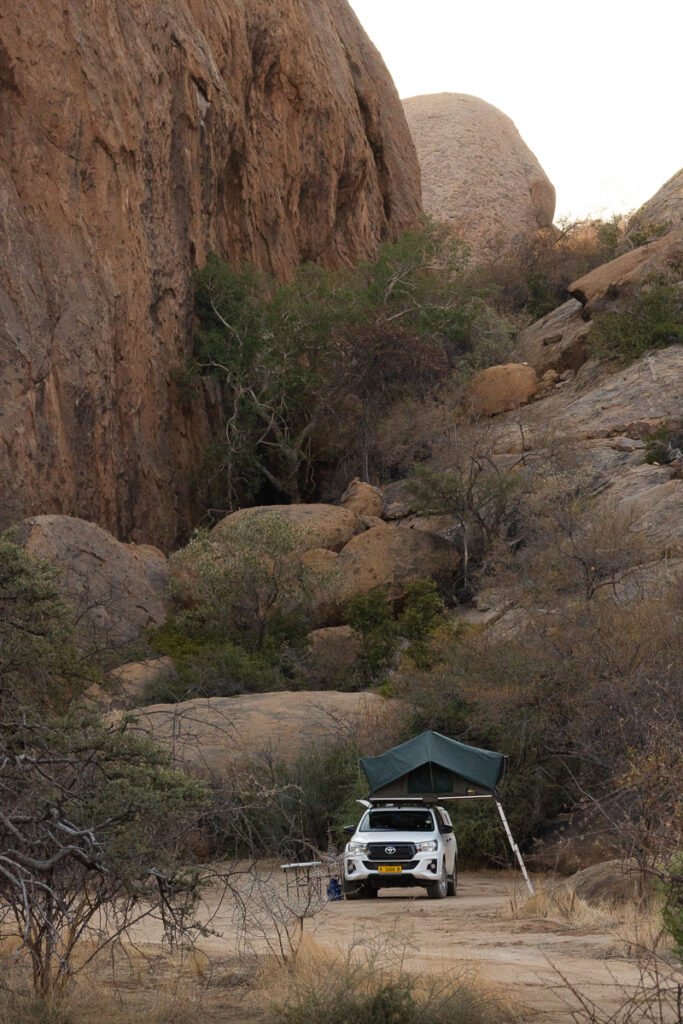
As the sun rose behind our tent on day 7, we woke up at the Three Elephants Campsite in Omandumba. Today marked the halfway point of our journey – how quickly time flies when adventure awaits at every turn!
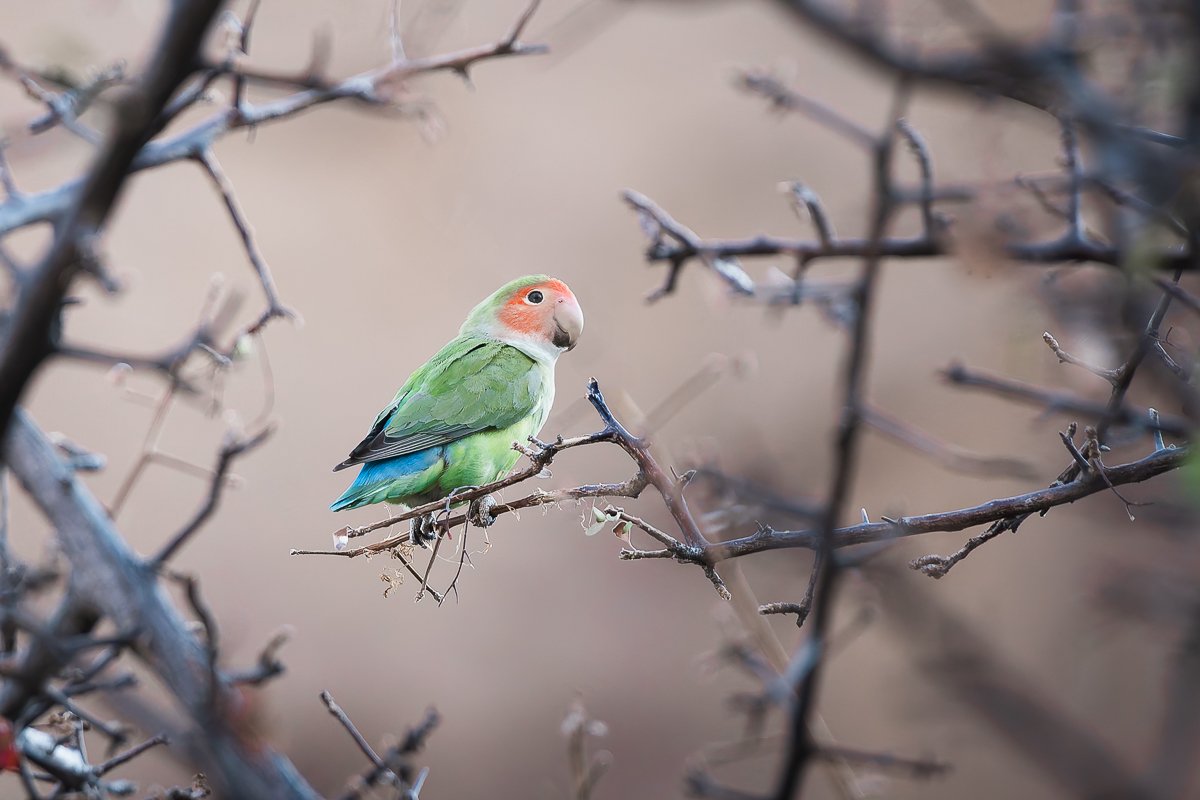
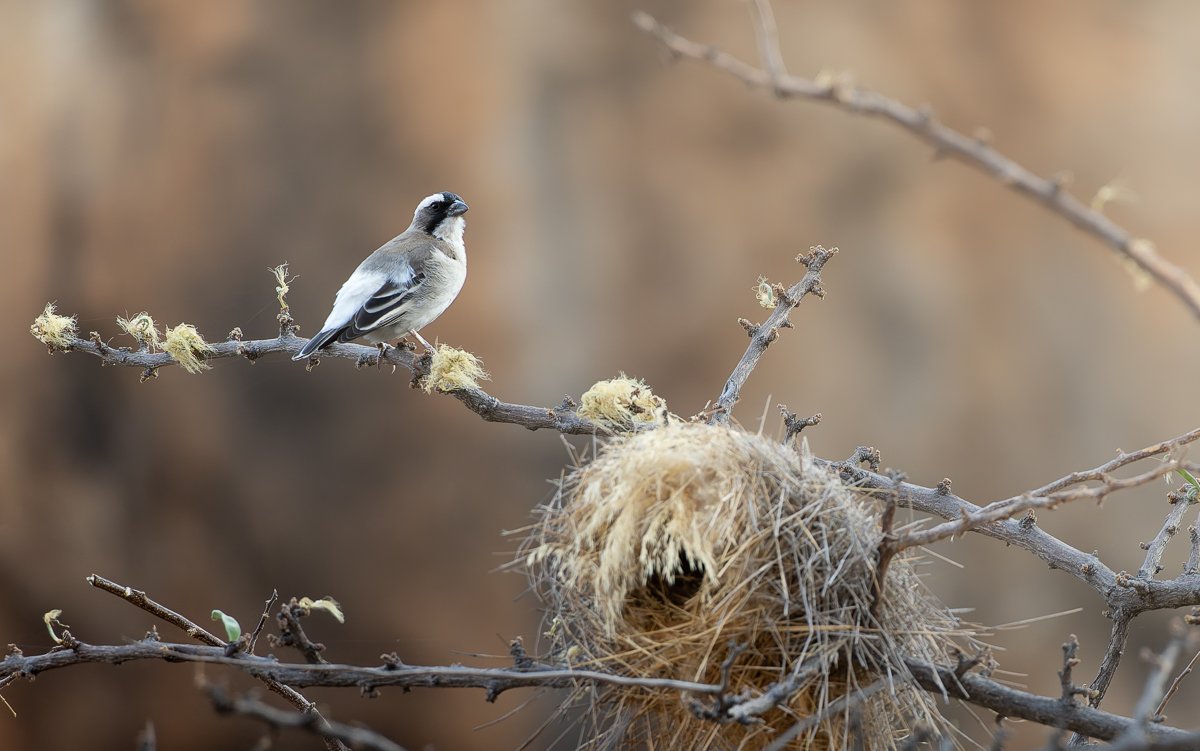
We began the day with a leisurely breakfast while observing the wildlife around our car. Small Rosy-faced Lovebirds (Agapornis roseicollis) and White-browed sparrow-weaver (Plocepasser mahali) flitted through the bushes, and a pair of eagles had made a nest right next to our camper in the cliff. Of course, breakfast for the chicks was in constant supply.
Our plan for the day was to head to the White Lady Lodge at Brandberg for a desert elephant drive. While desert elephants and those found in the savannah or steppe are the same species – Loxodonta africana – desert elephants have developed extraordinary adaptations to survive in one of Earth’s harshest environments.
We were eager to visit them, of course!
Full of excitement for the day’s adventure, we said goodbye to tonight’s campsite and headed back toward the guest farm to check out.
The two guys who had greeted us the day before were out on the porch, organizing a few things. They invited us for another coffee at one of the terraces and casually mentioned, “There might be some giraffes at the water hole.” Needless to say, we didn’t need any more convincing. We eagerly accepted the offer, grabbed our coffee, and headed straight to the water hole.
Sure enough, after just a few minutes of waiting, a family of eight giraffes appeared, munching on the sparse acacia leaves still hanging on the trees and occassionally taking a sip from the water hole. Our first giraffes of the trip! Wow, what a sight!
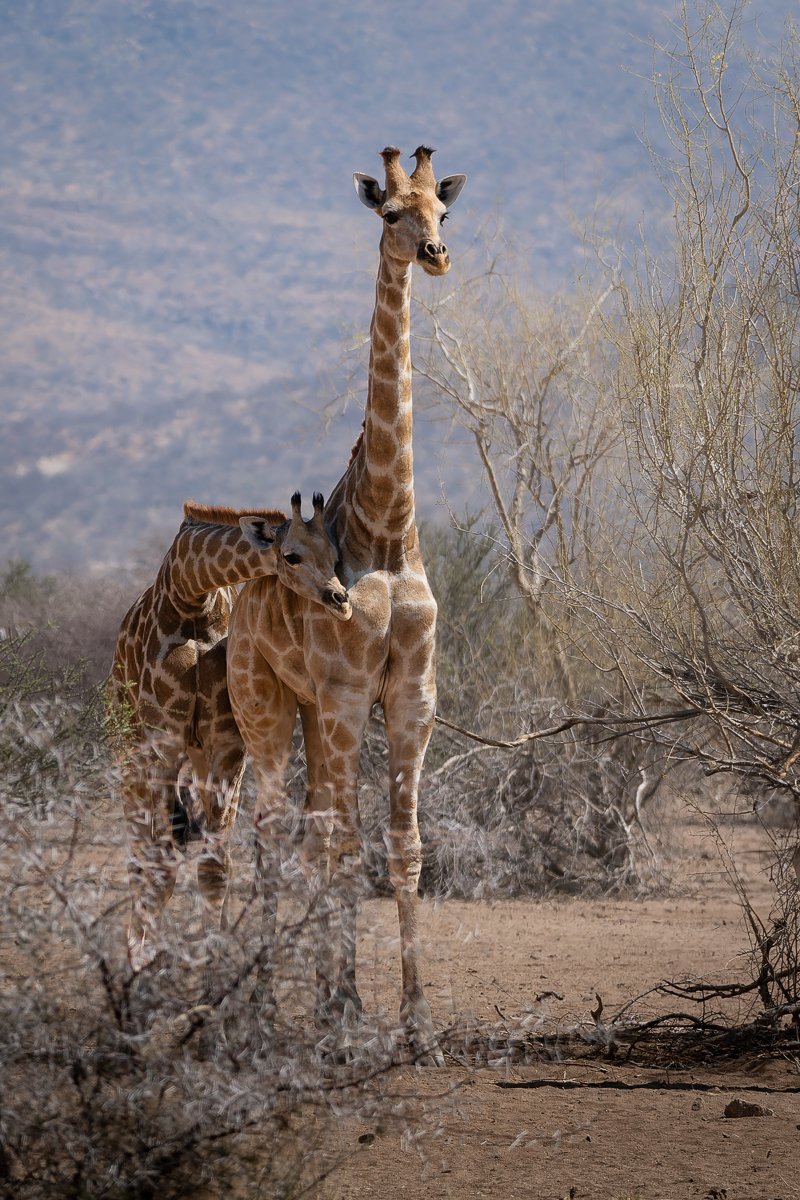
We watched them for about an hour, completely captivated. Eventually, however, we had to leave to ensure we wouldn’t be late for the desert elephant tour we’d already booked and were eagerly anticipating. Luckily, we arrived at White Lady Lodge with time to spare, so we enjoyed a quick lunch before hopping onto the old (!) Mercedes truck that would take us from the lodge’s premises to the desert elephants.
It turns out we didn’t even need the truck! Just three minutes into the drive, we spotted one of the elephants feeding on some long-hanging branches right inside the lodge’s premises. We were only about 5 meters away – close enough that we could even hear it breathing! Everyone knows elephants are big, but you truly grasp just how massive they are when you see one up close. Watching it feed and occasionally making eye contact with us was surreal. It felt as if it were looking straight into our souls.
After some minutes of pure fascination, we continued our drive out into the Ugab river bed. I kept wondering about how anything could survive out here – everything was dust-dry. Fortunately though, we found the desert elephants. The group even had a calf with them, of which we learned that it was the first that had survived over the past five years.
Fortunately, there’s a large water reservoir not far from the lodge where the elephants can drink, even when the riverbed has run dry.
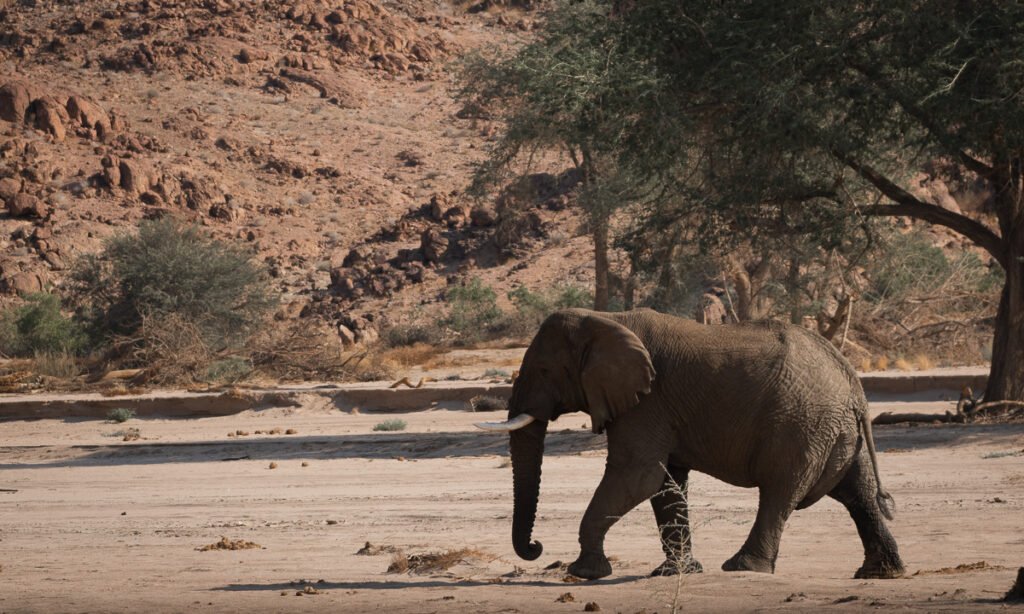
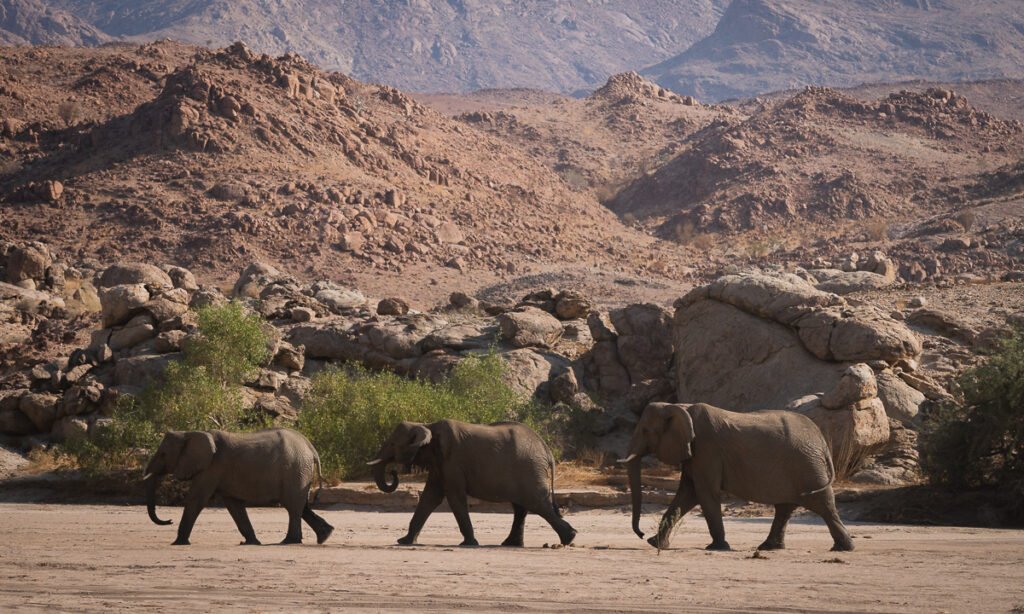
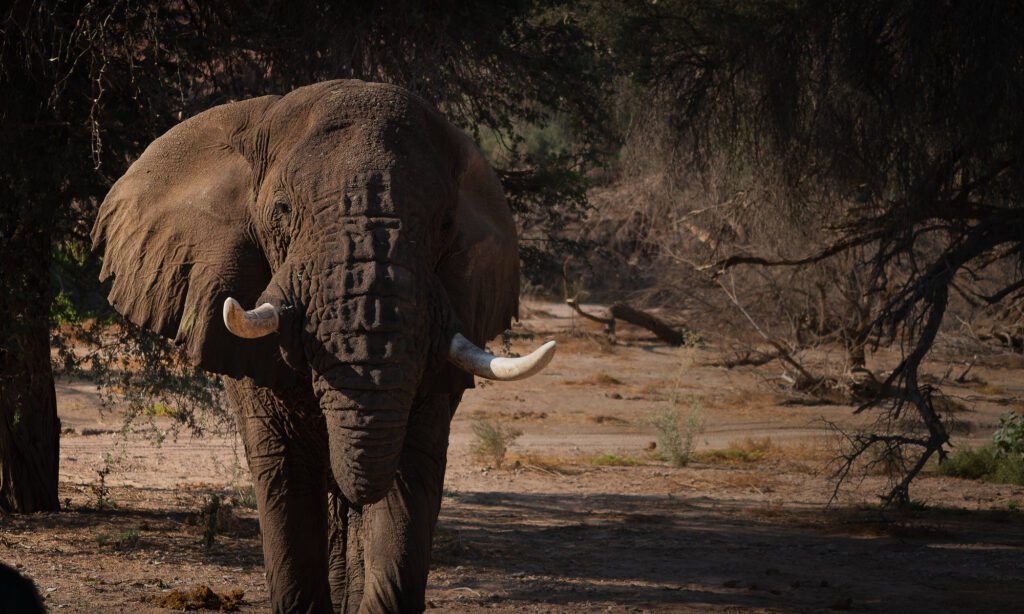
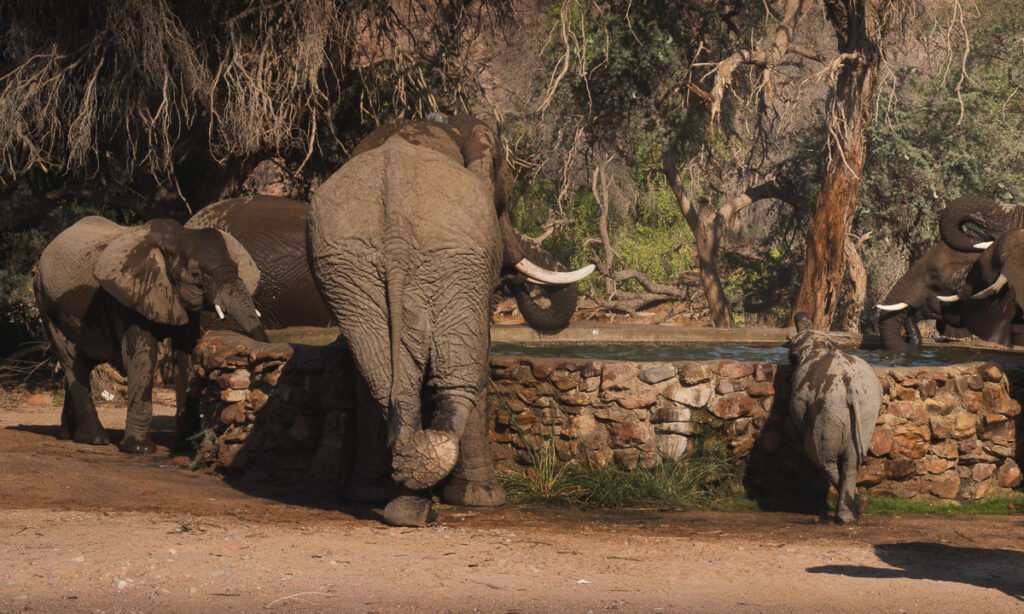
Desert elephants have developed some amazing adaptations and behaviors compared to their relatives inhabiting the African steppes and savannahs:
- Unlike typical elephants, desert elephants are known to climb steep hills and mountainous terrain. This ability helps them access water sources that other elephants might not be able to reach.
- Moreover, they tend to have larger, wider feet compared to their savannah counterparts. This adaptation helps them move more efficiently across sand dunes and rocky terrain, preventing them from sinking into the soft ground.
- Unlike other elephants, desert elephants can travel long distances in search of water, sometimes going up to four days without drinking. They rely on their keen memory and ability to find water sources, even in the most desolate areas.
Despite these amazing feats, this unique and important subspecies of the African elephant faces numerous threats from habitat loss, human-wildlife conflict, and poaching. Conservation efforts are in place to protect these incredible creatures, but their future still remains uncertain.
Let’s hope the conservation efforts will suffice to save these amazing creatures!
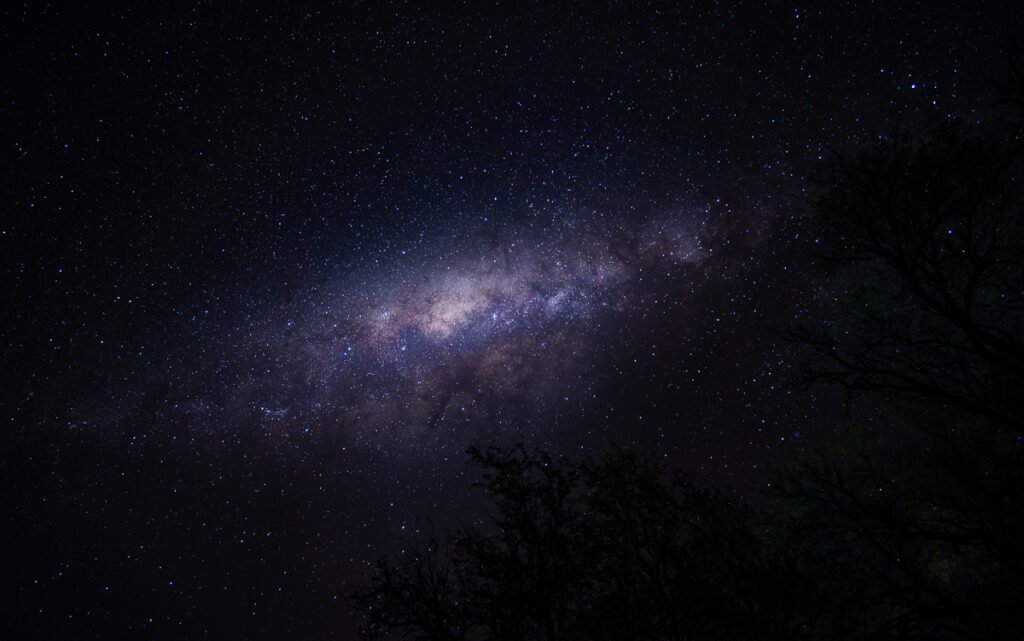
The next day was one I had been eagerly anticipating – we would be heading into the infamous Etosha National Park. Naturally, I wanted to be well-rested for the adventure ahead. However, the stunning night sky beckoned me to try capturing my very first shots of the Milky Way. And what can I say? The African night sky did not disappoint! It was absolutely mesmerizing.